AI Data Center Power Infrastructure: Key Design Considerations
AI data center power infrastructure connects the utility supply to the electrical systems that support servers, cooling and other critical facility loads. It includes transformers, switchgear, power distribution, UPS systems and backup generation, with battery energy storage used where its capabilities match the project’s requirements. This guide explains the main components and planning decisions, from utility capacity and load assessment to backup operation, maintenance and future expansion. The appropriate architecture depends on the site, operating requirements and engineering design.
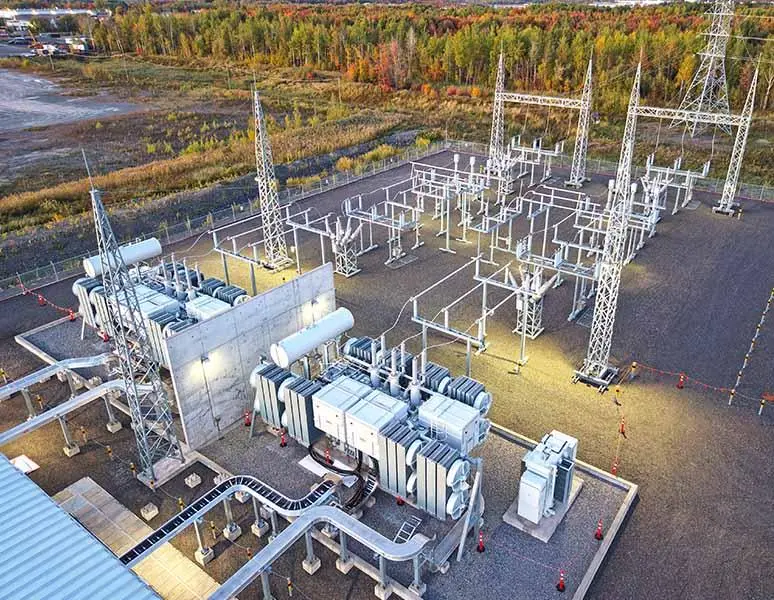
For developers and electrical engineers, the challenge goes beyond providing enough capacity. The distribution system, backup generation, and power conversion equipment must also work together under normal operating conditions and during power interruptions.
Several areas deserve particular attention when planning power infrastructure for an AI data center.
Utility Connection and Power Capacity
Planning begins with the power available at the site and the facility’s expected demand. Project teams should distinguish IT load from total facility load, including cooling and other supporting systems, and consider how demand may change as the site expands.
Before selecting major equipment, confirm the proposed service voltage, available utility capacity, connection requirements and expected energization schedule with the utility. These inputs help define the electrical architecture and identify constraints that equipment selection alone cannot resolve.
For projects in British Columbia that require a transmission connection, refer to BC Hydro’s transmission connection process for utility-specific requirements and planning steps.
Power Distribution for AI Data Centers
Larger facilities often receive utility power at medium voltage before stepping it down for distribution within the site. Transformer capacity, switchgear ratings, cable sizing, and protection coordination all need to reflect the expected load.
AI computing also introduces questions about load behaviour. Depending on workload scheduling and server operation, electrical demand may change over relatively short periods. Engineers need to understand these characteristics when evaluating distribution equipment and system capacity.
Expansion should be considered early. Increasing server capacity later may require changes to upstream transformers, switchgear, or utility connections if sufficient electrical capacity was not included in the original design.
UPS, Redundancy and Maintainability
UPS systems support designated critical loads during short supply interruptions and transitions to an alternative source. Their required power, runtime and operating arrangement depend on the loads being protected and the facility’s continuity requirements. Redundancy planning should also consider distribution paths, controls and maintenance isolation. Additional equipment does not by itself eliminate every single point of failure. The engineering design should establish how critical loads remain supported during planned maintenance and credible equipment failures.
Backup Power and Diesel Generator Systems
A utility interruption can affect computing operations, cooling equipment, and other supporting systems. The required backup arrangement depends on which loads must remain operational and how quickly alternative power must become available.
Diesel generators remain a common option for data center backup power. They can provide electrical supply during extended utility outages, subject to available fuel and the generator system's operating limits.
Generator selection involves more than matching the nameplate rating to the facility load. Engineers also need to consider starting performance, load acceptance, output voltage, operating duty, and the intended redundancy arrangement.
Containerized generator sets can simplify certain aspects of outdoor deployment by housing major equipment within a packaged enclosure. Site preparation, ventilation, exhaust, fuel storage, electrical connections, and maintenance access still require project-specific planning.
Keystone Power Systems offers containerized diesel generator sets in multiple power ratings and voltage configurations, including options for critical power applications.
Battery Energy Storage in AI Data Center Power Infrastructure
Battery Energy Storage Systems (BESS) can serve several functions in data center power infrastructure, although their role depends heavily on how they are configured.
For energy management, a BESS may charge during periods of lower demand and discharge when additional support is needed. This can be useful for certain peak-demand management strategies or facilities with constrained power availability.
Battery storage can also be incorporated into backup power arrangements. However, the battery's usable capacity, discharge rating, response time, and control system determine which loads it can support and for how long.
Engineering Consideration
A general-purpose BESS should not be assumed to provide the same functions as a dedicated uninterruptible power supply (UPS). Where uninterrupted operation is required, transfer performance and the complete backup architecture need to be evaluated.
Modular battery systems provide flexibility in selecting storage capacity, but additional modules still require suitable space, electrical connections, thermal management, and safety provisions.
Emerging Power Conversion Technologies
Solid-State Transformers (SSTs) are another technology being considered for advanced electrical distribution systems.
Unlike conventional transformers, SSTs use power electronic converters to perform voltage conversion and, depending on the design, additional power control functions.
This makes them relevant to discussions around medium-voltage conversion, DC distribution, and integration with power electronic equipment.
Their use is not automatically preferable to conventional transformers. Efficiency across the operating range, cooling requirements, protection design, reliability, and project cost must all be considered.
For AI data centers evaluating newer electrical architectures, SST technology may offer useful options where its conversion and control capabilities address specific system requirements.
System Integration and Protection Coordination
Power distribution, generators, battery storage, and conversion equipment should be evaluated as parts of the same electrical system.
For example, the generator arrangement influences backup transfer and distribution requirements. A BESS connected to the facility may require its own power conversion equipment, controls, and protection coordination. Introducing SST equipment can also change how parts of the distribution system are designed.
These connections matter during both normal operation and equipment faults. Equipment that performs well individually still needs to operate correctly within the overall electrical architecture.
Keystone Power Systems provides equipment technologies relevant to these applications. For a broader overview of how generator systems, battery storage, and power conversion can contribute to an integrated design, explore our AI data center power solutions .
Planning for Future Expansion
Many AI data center developments are planned in phases. Initial electrical infrastructure may serve only part of the eventual computing capacity, with additional equipment installed as demand grows.
This approach can reduce the amount of equipment needed during early development, but only if future expansion requirements are understood.
Space for additional transformers, distribution equipment, generators, and battery systems should be considered alongside upstream utility capacity. Maintenance access and construction activities during later phases can also affect an operating facility.
There is no single power infrastructure arrangement suitable for every AI data center. The appropriate design depends on electrical demand, available utility capacity, reliability requirements, site conditions, and the operator's plans for future growth.
Understanding these requirements early helps project teams make more informed equipment selections and avoid unnecessary changes as the facility develops.
Explore AI Data Center Power Solutions
Learn more about Keystone Power Systems' battery energy storage, diesel generator, and advanced power conversion technologies for AI data center power infrastructure.
Explore Power Solutions →
One Response